
Timeless Wisdom from the Drs. Hernandez Archives
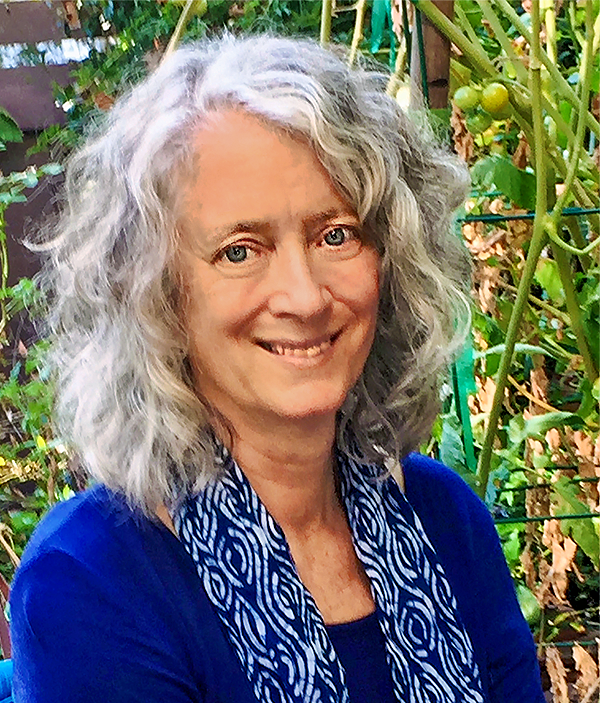
by Connie Hernandez, N.D.
A friend expressed concern about his wife’s health and asked me to spend a few minutes with her.
Barb had put on weight since I last saw her. Her eyes were slightly puffy and her ankles were a little swollen. She held out a hand, which felt cold and clammy.
I noticed that Barb’s skin was dry and cracked, and that she was shedding some hair. I asked her to stick out her tongue, which was pale and thick.
Barb complained of chilliness and expressed that she was “just not feeling quite right.” She thought she might be a little depressed, as she wasn’t her usual enthusiastic self – she felt too tired to make an effort.
Barb told me that her troubles started after a recent, stressful surgery, after which she received repeated doses of antibiotics to control a post-operative infection. At that point, her digestion went off and she found that the foods she had always enjoyed now bothered her.
I ordered several lab tests, including a comprehensive thyroid screen: Thyroid Stimulating Hormone (TSH), Free T4 (a thyroid hormone generated by the thyroid gland), Free T3 (an active form of thyroid hormone), reverse T3 (an inactive form of thyroid hormone), and antithyroid antibodies.
I was fairly sure what we would find. The results confirmed my expectations — and surprised me.
We look for TSH to be less than 3. The higher the TSH, the more severe the low thyroid condition.
Barb’s TSH was 22, the second-highest TSH I’d seen in my many years of practice!
Compounding the situation, the little T4 she had wasn’t converting to T3, a typical finding post-surgical finding that suggested various nutrient deficiencies.
Her antithyroid antibodies were positive for Hashimoto’s thyroiditis, a chronic autoimmune disorder where the immune system attacks the thyroid gland, leading to an underactive thyroid (hypothyroidism).
Barb was iron deficient, and subsequent testing revealed that she had developed a sensitivity to gluten and dairy. Sensitivities to common foods often develop after antibiotic use, and gluten sensitivity is a common problem in autoimmune thyroid.
I asked Barb to avoid gluten and dairy, and to rotate other foods. We supported her thyroid with iron and other nutrients necessary for conversion of T4 to T3, plus a thyroid glandular supplement containing both T4 and T3.
I asked Barb to wear a blue scarf around her neck, and to practice a few simple yoga postures (the lion and shoulder stand), and to sing along with herself as she played the piano.
Six weeks later, Barb was feeling herself again. Her joie de vivre had returned, her skin was less dry, and the chills had vanished as her body had regained its usual warmth.
Barb was especially delighted and amused by the use of color and sound in her treatment.
When she playfully stuck her tongue out for me to see, it was back to normal size and had a healthy pink color.
Drs. Connie (Ruhia) and Marcel (Mahavir) Hernandez
836 W. El Camino Real
Mountain View, CA 94040
DrConnie@DrsHernandez.com
DrMarcel@DrsHernandez.com
650-282-5176 (voice)
(leave us a message)
650-447-2622 (fax)